
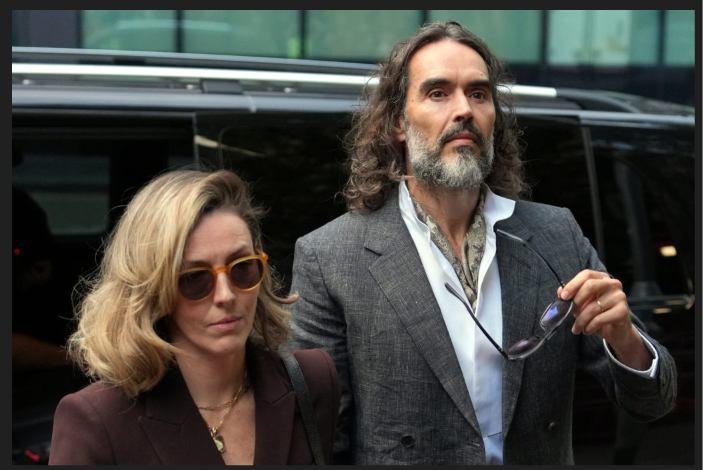
LONDON: British comedian and actor Russell Brand has appeared at Southwark Crown Court in London as proceedings began in a trial involving seven criminal charges relating to allegations made by six women. Brand has pleaded not guilty to all seven counts and remains legally presumed innocent unless proven guilty.
The opening day focused on jury selection, with proceedings adjourned until Tuesday. The prosecution is expected to present its case later in the week, according to reports carried by CBS News and NBC News through the Associated Press.
The case involves allegations of rape, sexual assault and indecent assault said to have occurred between 1999 and 2009. The trial is expected to examine the allegations, the evidence presented by the prosecution and the arguments made by the defence.
Russell Brand Faces Seven Charges at Southwark Crown Court
Brand, 51, faces three counts of rape, three counts of sexual assault and one count of indecent assault. The allegations concern six women and cover a period spanning a decade.
The comedian appeared at Southwark Crown Court on Monday accompanied by security personnel and his wife, Laura Gallacher. After the day’s proceedings, he left the court while the case remained ongoing.
Brand has denied all seven charges. No evidence was presented to the jury on the opening day, which was devoted to the selection process. The prosecution’s opening statement and the presentation of evidence are expected to provide further details about the case.
The charges must be considered individually, and the jury will be responsible for assessing the evidence before reaching its verdicts.
What Are the Allegations Against Russell Brand?
Earlier court hearings outlined several allegations that are expected to form part of the proceedings. These include an alleged rape in a hotel room during a UK Labour Party conference, an alleged incident involving a television worker in a toilet, and allegations by a radio station worker of unwanted kissing and groping.
These accounts remain allegations and have not been established as facts through a verdict in the current trial. Brand has pleaded not guilty to every charge.
The six complainants are entitled to lifetime anonymity under applicable UK law. Their identities should therefore remain protected in reporting on the proceedings.
The trial will examine the evidence relating to the charges, allowing the prosecution and defence to present their respective cases. Until the jury reaches its decisions, no conclusion about Brand’s guilt or innocence is warranted.
When Will the Russell Brand Trial Continue?
The court adjourned after jury selection on Monday, with proceedings scheduled to resume on Tuesday. The prosecution is expected to open its case later in the week.
Reports about the anticipated duration have differed. CBS News, citing the Associated Press, reported that the trial could last up to ten weeks, while NBC News carried an estimate of ten to twelve weeks.
The precise timetable will depend on how the proceedings develop, including the evidence presented and the time required for the prosecution and defence to address the charges.
The case follows earlier proceedings in which Brand pleaded not guilty in May 2025 to a smaller set of charges, according to the supplied report. The current trial brings seven counts before the jury.
Why the Case Could Take Weeks to Conclude
The allegations relate to events said to have taken place between 1999 and 2009. Because of the time that has elapsed, the proceedings may involve the examination of witness testimony, historical records and other available evidence.
The jury will need to consider the reliability and relevance of the evidence presented in court. The age of the allegations does not itself establish whether they are true or false; the verdicts must be based on the evidence and the applicable legal standards.
The prosecution and defence will have the opportunity to address the evidence as the trial progresses. Details about witnesses, documentary material and the defence strategy will become clearer only through the proceedings.
Russell Brand’s Career and Public Profile
Russell Brand became widely known through British television, radio and comedy during the early 2000s. He subsequently developed an international film career, appearing in productions including Forgetting Sarah Marshall and Get Him to the Greek.
In recent years, Brand has developed a substantial online audience through commentary on wellness, religion, politics and conspiracy-related subjects. His move away from mainstream entertainment has also formed part of his more recent public profile.
His celebrity status has brought considerable attention to the court case. However, his career, public statements and online following are separate from the evidence that the jury must consider when deciding the charges.
What Happens Next in the Russell Brand Trial?
The next stage is expected to include the prosecution’s opening statement and the presentation of evidence. The defence will also have the opportunity to challenge the prosecution’s case and present its arguments in accordance with the court’s procedures.
It remains unclear whether the proceedings will conclude within the estimates reported by the media. The timetable, the witnesses who will testify and the eventual verdicts will depend on how the case unfolds.
As the trial continues, reporting must distinguish between allegations, evidence presented in court and findings established by the jury. Brand has denied all seven charges and remains presumed innocent unless and until guilt is established according to law.
Conclusion
The Russell Brand trial at Southwark Crown Court marks the beginning of a closely watched legal case involving seven charges and six complainants. Following jury selection, attention is expected to turn to the prosecution’s evidence and the defence’s response.
The outcome remains undecided. The jury’s responsibility is to assess the evidence impartially and reach verdicts based on the case presented in court, rather than public opinion or media attention.